
❋
What is Tebori?
The Ancient Japanese Art of Hand Tattooing
The Origins of Tebori
Tebori has its origins in Edo period Japan — a golden era of art, craft, and cultural identity that ran from 1603 to 1868. During this time tattooing became woven into the fabric of Japanese life, worn by firefighters, labourers, and devotees as symbols of protection, community, and spiritual belief.
The technique — hand-applied needles worked rhythmically into the skin — predates every modern tattooing tool by centuries. It requires no electricity, no machine, no shortcut. Only a steady hand, deep knowledge, and years of practice.
It is a tradition that nearly disappeared as Japan modernised and tattooing was pushed underground. It survived because certain masters refused to let it die — passing it forward through formal apprenticeship, one student at a time. Horiyou 彫陽 is one of those students.
The machine changed tattooing forever — faster, more consistent, extraordinary in the right hands. Horiyou uses both. This is not a comparison of better or worse. It is a comparison of different.
Healing The hand technique is gentler on surrounding tissue. Most tebori clients report faster healing, less swelling, and a healed result that retains its softness and ages gracefully.
Sensation Machine work is sharp and consistent. Tebori is rhythmic — closer to a deep scratch, without mechanical vibration. Many clients find longer sessions easier to endure.
Horiyou's Approach In most traditional Japanese pieces, Horiyou uses the machine for outlines — where precision and clean linework are critical — and tebori for shading and colour packing, where the hand technique produces its most distinctive results. The combination honours both traditions while serving the integrity of the work.
The right choice depends on the design, placement, and your skin. Horiyou will discuss both during your consultation.
Tebori vs Machine
There is a moment in a tebori session that clients often describe afterward — a point where the sensation shifts from sharp to something almost meditative. Where the rhythm of the sashibo becomes a background to the experience rather than the centre of it.
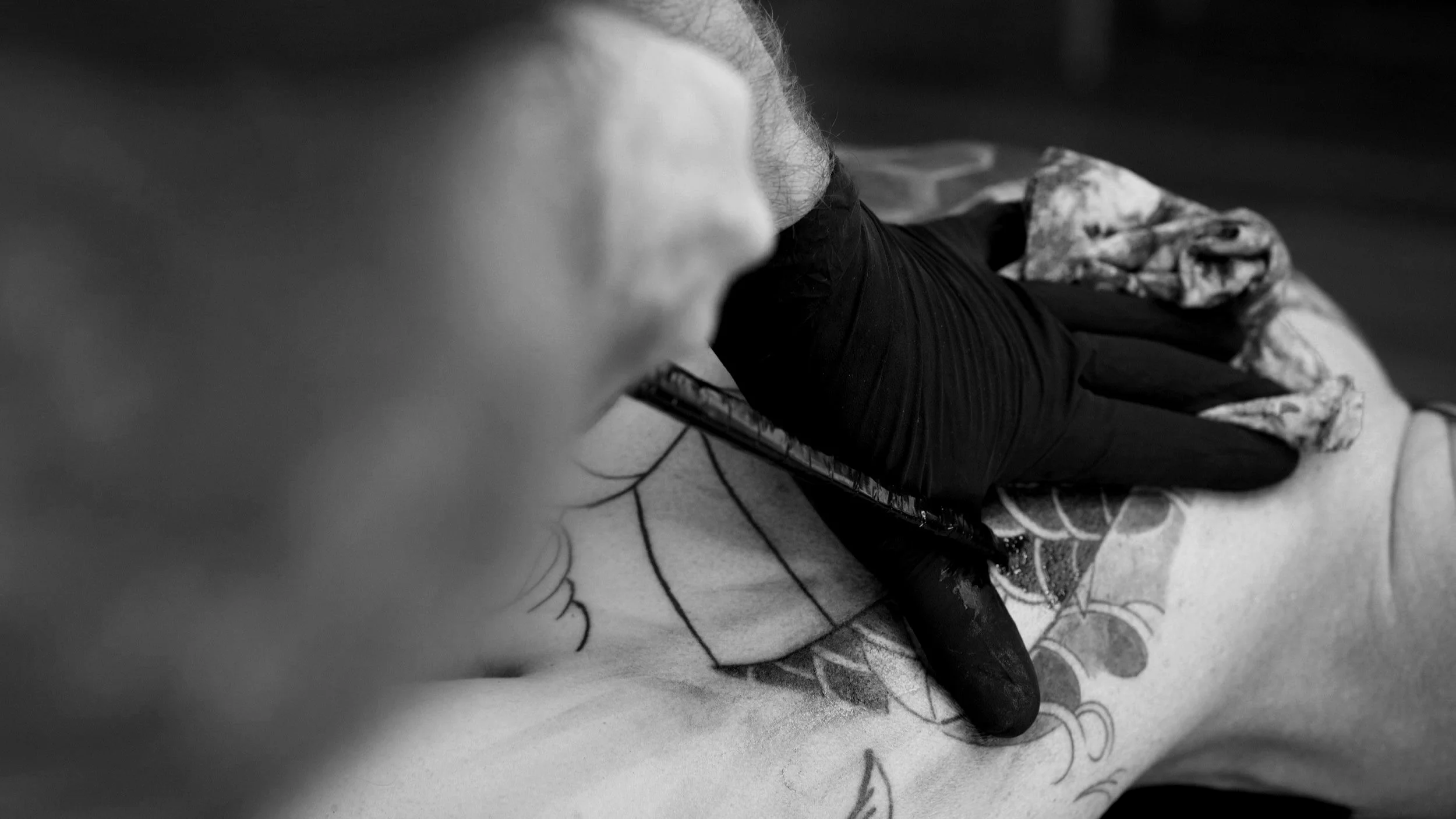
The sashibo — a handled tool fitted with needles — is worked into the skin in a controlled motion refined over centuries. Unlike a machine, which vibrates at a fixed frequency, tebori follows the artist. Speed, depth, and pressure shift constantly in response to the skin, the placement, and the design.
The ink is sumi — ancient, carbon-based, the same medium Japanese masters have used for over a centuries. In the skin it produces a depth that clients notice immediately. Softer than machine work. More alive.
The tools are simple. The knowledge behind them is not. Horiyou spent years learning not just the motion of tebori, but the judgment that makes it work — how to read the skin, when to slow down, how to adapt in real time.
That judgment is the product of lineage, time, and the kind of dedication that only comes from treating a craft as something worth protecting.
How Tebori Works
The Horikoi Lineage
In traditional Japanese tattooing, lineage is everything. It is not enough to master the technique — you must receive it. Passed from master to student, hand to hand, the knowledge carries with it not just skill but responsibility. The responsibility to honour what came before, and to carry it forward with integrity.
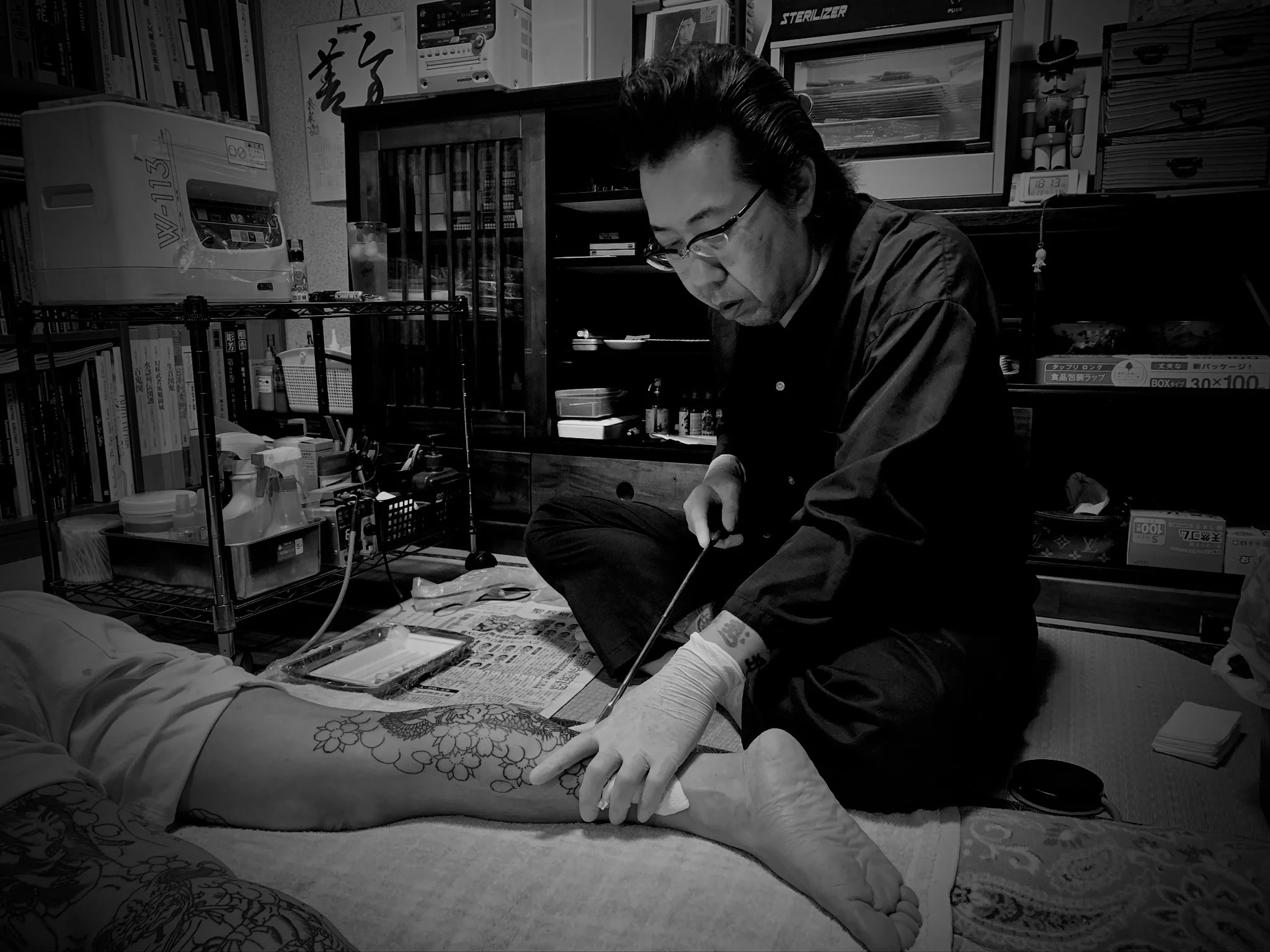
Horiyou 彫陽 has been tattooing for nearly 30 years. For 7 of those years he studied under Sensei Horikoi — one of Japan's most respected traditional tattoo masters. He travelled to Japan to work directly alongside him, absorbing not just technique but philosophy, approach, and the deeper understanding of what traditional Japanese tattooing truly means. When travel was not possible, the exchange continued — through communication, study, and a commitment that distance could not interrupt.
That dedication earned Horiyou something few Western artists will ever receive — formal acceptance into the Horikoi family.
It is a distinction that cannot be bought, copied, or self-proclaimed. It is given — by a master who has spent a lifetime protecting a tradition — to someone he trusts to carry it forward.
That trust is present in every piece Horiyou creates.
Horishi (彫師) is the Japanese word for tattooer — literally "one who carves."
It is a title that carries weight in Japanese culture, denoting not just technical skill but a commitment to the craft and its traditions. Upon his formal acceptance into the Horikoi tattoo family in Japan, Lars Walkling received the artist name Horiyou 彫陽 — a name that reflects both the lineage he carries and the responsibility that comes with it. In the traditional lineage, a name is not chosen — it is earned.
❋
What to Expect
Every session at ShinouTattoo begins before the needle touches skin. Horiyou takes time to understand not just what you want, but why — the meaning behind the motif, the placement on the body, the way the design will move and age over a lifetime. Traditional Japanese tattooing is not decoration. It is a commitment, and it deserves to be treated as one.
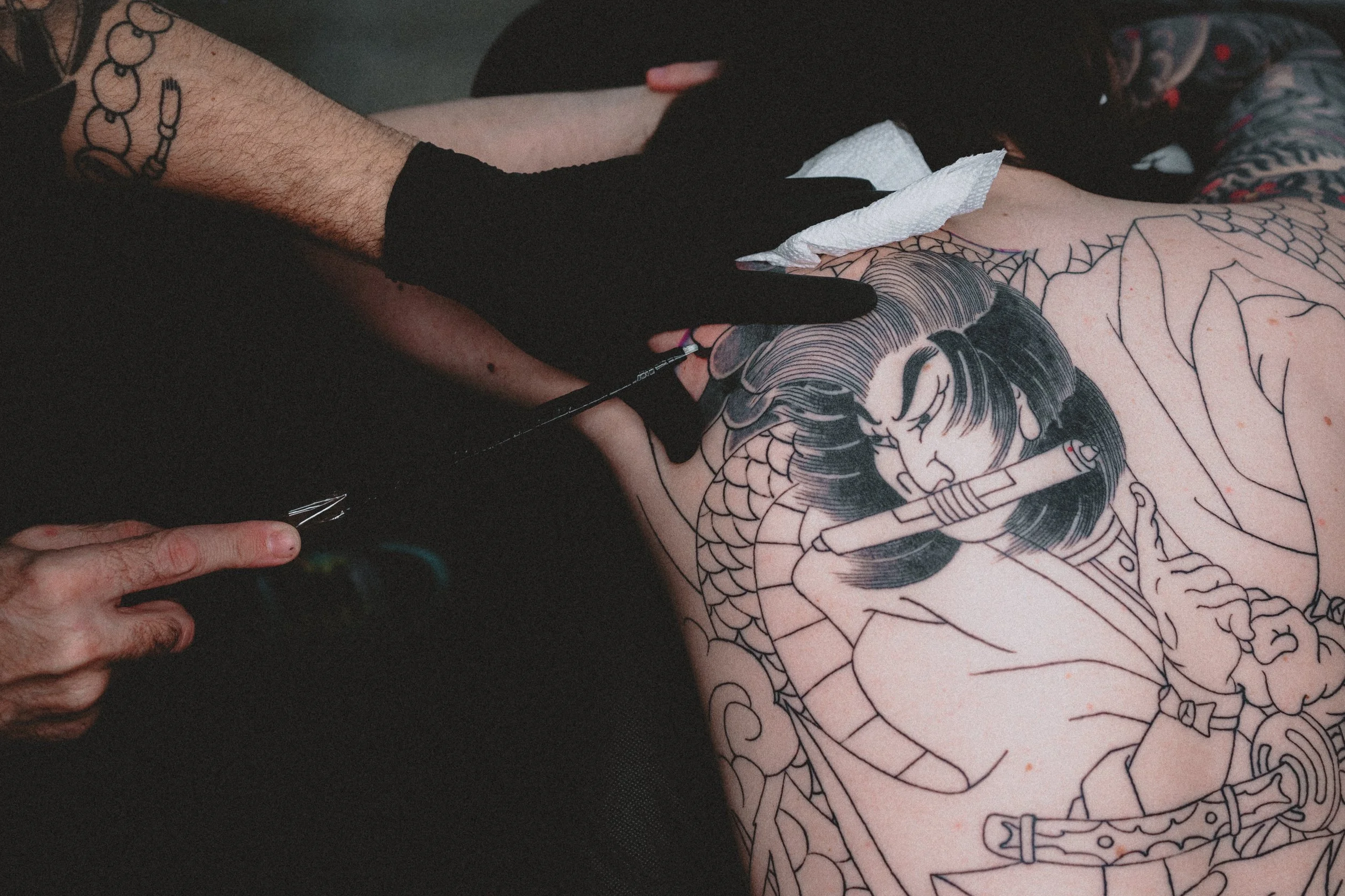
Traditional Japanese irezumi full back piece in progress by Horiyou 彫陽 — tebori and machine tattooing at ShinouTattoo Florida
The Consultation Before any work begins, Horiyou will discuss your design, placement, and whether tebori, machine, or a combination of both is best suited to your piece. This is not a formality — it is where the work truly starts.
The Session Tebori sessions tend to be calm and focused. The absence of machine noise changes the atmosphere of the studio entirely.Many clients are surprised by how meditative the experience feels. Horiyou works methodically and precisely, checking in throughout to ensure your comfort.
The Result You will leave with aftercare instructions and a clear understanding of how to protect your investment during healing. Tebori heals gently — but how you care for it in the first weeks determines how it looks for the rest of your life.
What to Bring Come rested, fed, and hydrated. Wear or bring clothing that gives easy access to the area being tattooed. Leave expectations of rushing at the door — good work takes the time it takes.
Horiyou created a place of craft, focus, and respect for the tradition. If that resonates with you, the consultation is your first step.
See the work in the full portfolio